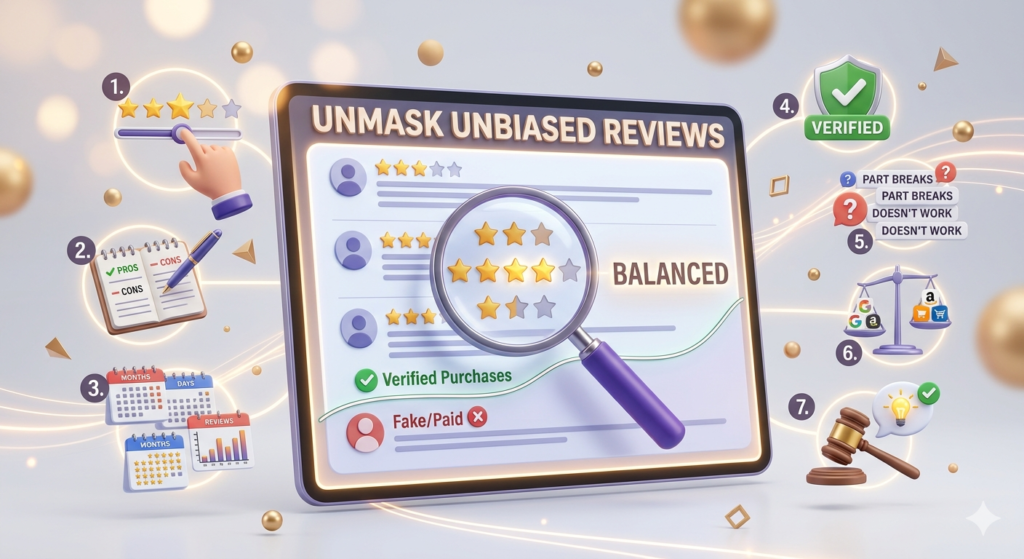
Reviews are one of the most useful tools for online shoppers — and one of the easiest to manipulate. Fake reviews, paid praise, and review-bombing all muddy the water. Here is how to read between the lines and find the truth.
Start with the middle ratings
Five-star reviews are often emotional, and one-star reviews are sometimes about shipping or buyer error rather than the product. The most useful, balanced feedback usually sits in the three- and four-star range.
Look for specific details
Genuine reviews mention concrete details: how the product performed over time, what it is like to use day to day, and specific pros and cons. Vague, glowing reviews full of marketing language are a red flag.
Check the pattern, not just the score
A flood of five-star reviews all posted within a few days is suspicious. Healthy products tend to accumulate reviews steadily over time, with a natural mix of opinions.
Prioritize verified purchases
Reviews marked as verified purchases are far more trustworthy than anonymous ones, because the platform has confirmed the reviewer actually bought the item.
Search for the recurring complaint
If multiple reviewers independently mention the same flaw — a part that breaks, a feature that disappoints — take it seriously. One complaint can be bad luck; a pattern is information.
Cross-check across sources
Do not rely on a single platform. Compare what reviewers say on the retailer’s site with independent reviews and discussions elsewhere. When different sources agree, you can trust the conclusion.
Bottom line
Treat reviews as evidence to weigh, not verdicts to obey. Read critically, look for patterns and specifics, and you will make far better decisions than the star rating alone would suggest.